

Car Insurance Claim
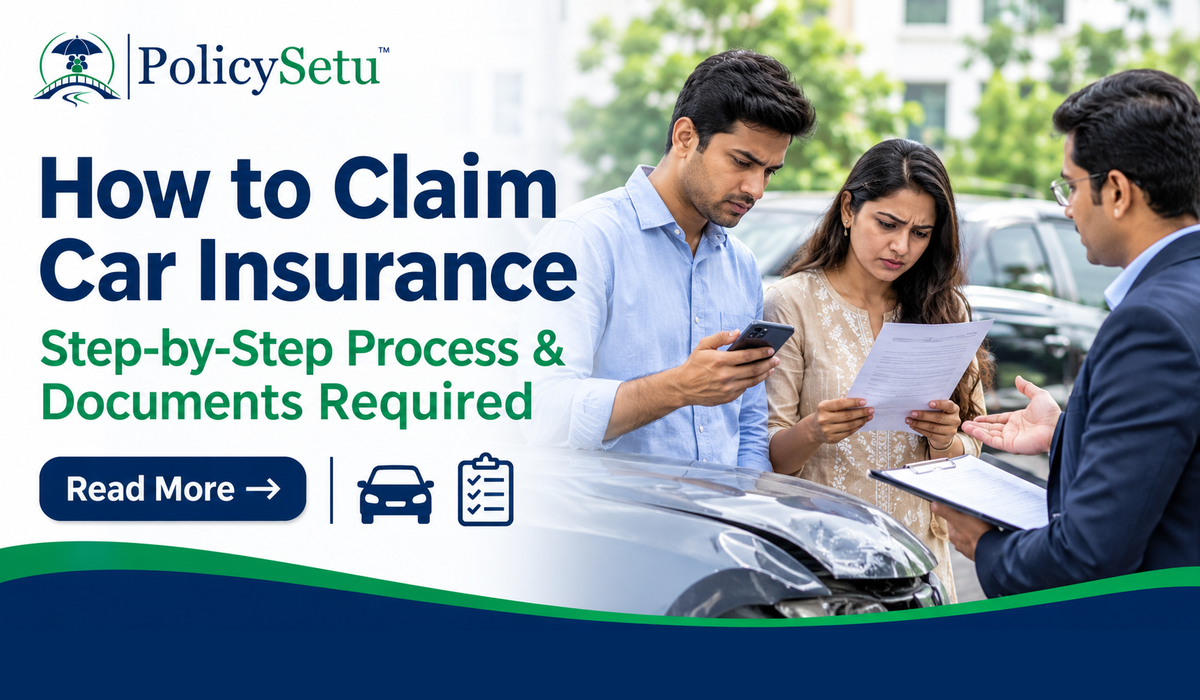
How to Claim Car Insurance in India: Step-by-Step Process & Documents Required
1. What Is a Car Insurance Claim?
A car insurance claim is a formal request asking your insurer to cover a loss or liability under your policy. The protection available depends directly on the type of cover you purchased.
Own-Damage Insurance: Covers accidental damage to your own vehicle caused by collisions, fire, theft, or natural calamities. It is available through a comprehensive plan or a standalone own-damage policy.
Third-Party Insurance: Covers your legal liability for injury, death, or property damage caused to another person by your vehicle. It is legally mandatory in India under Section 146 of the Motor Vehicles Act, 1988, but does not pay for damage to your own car.
Comprehensive Car Insurance: Combines third-party liability and own-damage cover into a single policy, subject to specific deductibles, depreciation, and optional add-ons.
Understanding your policy type is the first step before you raise a motor insurance claim.
2. Step‑by‑Step Guide to How to Claim Car Insurance
For most own-damage accidental claims, insurers follow a standardized workflow. Follow these seven practical steps to ensure a smooth settlement:
Step 1: Inform Your Insurance Company Promptly
Contact your insurer as soon as reasonably possible following an accident or theft. You can register an intimation through the insurer’s mobile app, official website, toll-free customer care, or your insurance agent. Keep your policy number, vehicle registration number, date, time, location, and a brief description of the incident handy. Always note down your claim reference number for future tracking.
Step 2: Record the Damage and Preserve Evidence
Where safe to do so, take clear photographs and videos of your car, the damaged parts, and the overall accident scene before moving the vehicle. If another vehicle was involved, note down its registration details. Accurate visual evidence prevents disputes over how the damage occurred.
Step 3: Contact the Police if Required
Filing a police report or FIR is compulsory in cases involving vehicle theft, hit-and-run incidents, bodily injuries, death, or third-party property damage. For minor accidental scratches involving only your own vehicle, an FIR is usually not required—confirm this directly with your insurer.
Step 4: Arrange the Vehicle Inspection
The insurer will assign an independent surveyor or loss assessor to examine your car and assess the damage against the workshop estimate. Do not begin permanent repairs or dismantle damaged parts until the surveyor has officially inspected the vehicle and authorized the estimate.
Step 5: Submit the Required Paperwork
Complete the claim form and provide the necessary car insurance claim documents requested for your incident. Submitting complete, legible records right away prevents unnecessary administrative delays.
Step 6: Get Repair Approval and Choose a Garage
Confirm whether repairs will be settled through a cashless facility at an authorized network garage or through reimbursement at a non-network garage. Review the garage estimate to see which items are covered and what you may owe for depreciation, deductibles, or consumables.
Step 7: Complete Repairs and Review Settlement
Once repairs are finished, review the final settlement sheet. In a cashless claim, the insurer settles the approved repair costs directly with the network garage. For reimbursement claims, pay the workshop bill and submit original receipts and invoices to the insurer for payout.
3. Essential Car Insurance Claim Documents You Need
Organizing your paperwork before filing eliminates back-and-forth communication. The exact paperwork depends on the nature of your claim:
Standard Documents for Own-Damage Accident Claims
- Insurance Policy Copy: Your policy schedule or active policy number.
- Completed Claim Form: Duly filled and signed by the policyholder.
- Registration Certificate (RC): Self-attested copy of the vehicle RC.
- Driving Licence: Copy of the valid licence of the person driving during the accident.
- Accident Evidence: Photos or videos showing vehicle damage and accident context.
- Repair Estimate & Job Card: Itemized estimate prepared by the repair garage.
- Police Records: FIR or police diary entry if applicable.
Additional Documents for Reimbursement Claims
- Original itemized repair bills and final cash receipts.
- Detailed workshop job card and payment proof.
- Cancelled cheque or bank passbook copy for direct account transfer.
Documents for Vehicle Theft Claims
- FIR copy and final police investigation report (untraced/non-traceable certificate).
- Original policy document and vehicle Registration Certificate.
- All original sets of vehicle ignition keys.
- RTO theft intimation and Form 28, 29, 30, and 35.
- No Objection Certificate (NOC) from the financier if the vehicle is on a loan.
4. Cashless vs. Reimbursement Claims
When you file an own-damage claim, you can settle it through two different routes:
What Is a Cashless Claim?
In a cashless settlement, you repair your vehicle at an authorized network workshop. After the surveyor approves the estimate, the insurance company pays its admissible share directly to the workshop. You only pay for deductibles, depreciation on replaced parts, and non-covered consumables.
What Is a Reimbursement Claim?
If you repair your vehicle at an independent, non-network garage, you must follow the reimbursement route. You pay the entire repair bill out of pocket first, collect all original tax invoices and payment receipts, and submit them to the insurer to receive reimbursement for the approved amount.
Understanding how to claim car insurance through either route helps you plan your finances and avoid surprises.
5. Why Can a Car Insurance Claim Be Rejected?
Understanding common policy exclusions helps you avoid costly claim repudiations:
- Driving Without a Valid Licence: The person driving did not hold an active, appropriate licence category at the time of the collision.
- Driving Under the Influence: The incident involved alcohol, drugs, or illegal substances.
- Policy Lapsed: The accident occurred after the policy expiration date without renewal.
- Consequential Damage: Driving the car after an accident (such as running the engine after radiator damage or in floodwater), leading to engine seizure.
- Fraud or Misrepresentation: Submitting fabricated bills, staged accident details, or false documentation.
- Unauthorized Repairs: Dismantling or repairing the vehicle before the surveyor completes the inspection.
6. Practical Precautions Before Filing a Claim
- Intimate Immediately: Adhere to the insurer's reporting window (usually 24 to 48 hours).
- Assess the No Claim Bonus (NCB): For minor cosmetic dents or scratches, calculate whether the claim payout exceeds the NCB discount you will forfeit on renewal.
- Maintain Complete Records: Keep digital copies of all survey reports, repair estimates, workshop bills, and claim numbers.
- Clarify Deductions: Always ask the surveyor for a written breakdown if specific parts or labor charges are disallowed.
7. How to Resolve Claim Delays and Rejections
If your claim is stalled, unfairly short-settled, or rejected:
- Request a Written Assessment Sheet: Ask your insurer for the surveyor's detailed loss assessment report and specific policy clauses cited for any deductions.
- Escalate to the Grievance Redressal Officer (GRO): File a written complaint with your insurer’s internal Grievance Cell along with supporting evidence.
- Approach IRDAI Bima Bharosa: If the insurer does not resolve your issue within 15 days, lodge a complaint on IRDAI's Bima Bharosa portal.
- File with the Insurance Ombudsman: For unresolved disputes up to ₹50 lakhs, approach the local Insurance Ombudsman for an impartial, cost-free resolution.
Frequently asked questions
How to claim car insurance after an accident?
What are the main car insurance claim documents?
How to claim car insurance without an FIR?
How long does a car insurance claim take in India?
Can I claim if someone else was driving?
Need help with your claim?
Talk to Policy Setu for clear next steps on your policy or claim.
Get Free Consultation